


Welcome to orinanews.com, where America’s most startling stories are explained in simple language. The Pentagon has given Homeland Security permission to test a military heat ray at the US border — a device that fires an invisible beam and causes an intense burning sensation on human skin. At orinanews.com, we have gathered every verified fact about the heat ray border test plan, from the Pentagon memo to the fierce debate it has ignited. Read the full breakdown below, and follow https://orinanews.com for daily updates on this developing story.
In this article:
- Heat Ray Border Test: The Pentagon Memo
- How the Heat Ray Border Weapon Works
- Why the Border: A History of Rejected Ideas
- The Legal and Ethical Storm Over the Plan
Heat Ray Border Test: The Pentagon Memo
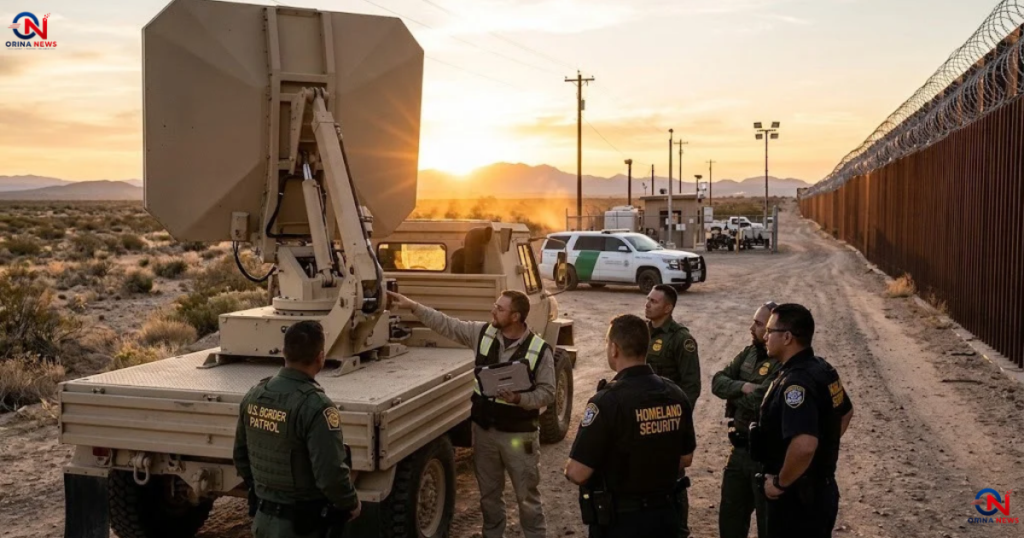
The story was first reported by CNN, which obtained a memo signed by Defense Secretary Pete Hegseth last month. According to that memo, the Pentagon has given the Department of Homeland Security permission to test a military-grade heat ray and develop tactics for its potential use in operations at the southern US border. The memo approves what it calls a “temporary loan” of one Active Denial System for seven months, beginning in September, and states that the system “shall not be operated by DoW (Department of War) personnel” — wording that appears to distance the Pentagon from how the weapon may ultimately be used. Instead, the memo says DHS is solely responsible for “system employment, use and development of tactics, techniques and procedures.” A defense official told CNN that when the seven-month loan ends, Homeland Security can submit another request to keep using the system in border operations if officials decide it is needed. A Customs and Border Protection spokesperson said the agency keeps reviewing new technologies that could strengthen its mission. When asked for comment, the Pentagon referred all questions to DHS.
How the Heat Ray Border Weapon Works
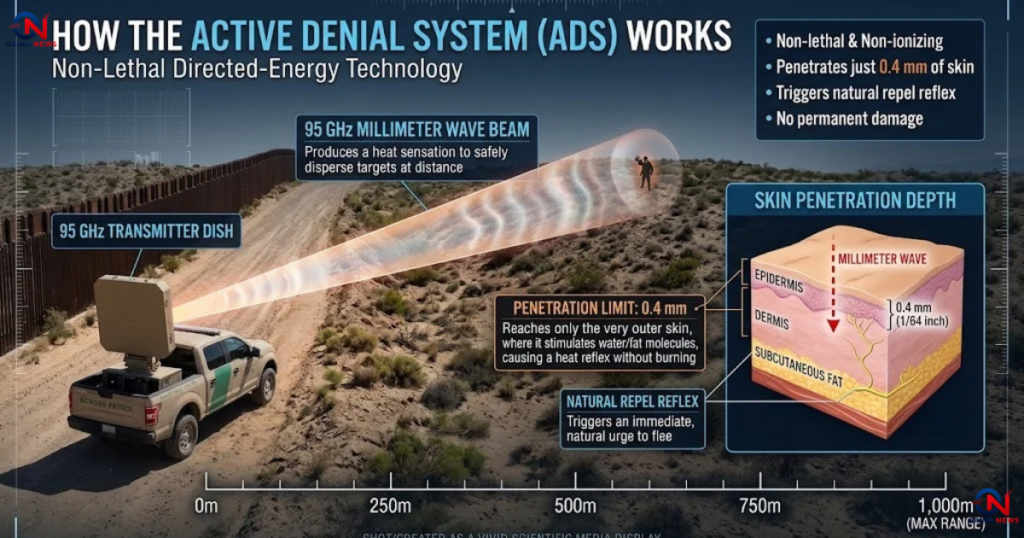
The heat ray, officially known as the Active Denial System, is classified as a nonlethal weapon. It fires an invisible beam of electromagnetic waves that can reach a little more than half a mile, according to the US military. When the beam touches human skin, it produces a burning sensation that Pentagon officials have previously compared to the blast of heat felt when opening a hot oven. Military officials have said the resulting “tingling effect” lasts between 10 and 15 minutes and creates what they describe as “an instinctive and irresistible urge to run from the effect.” In other words, the weapon does not need to cause lasting injury to work — the pain alone is designed to make crowds scatter. Supporters inside the government argue that this makes it a middle option between doing nothing and using lethal force. Critics answer that a weapon engineered to inflict pain on human beings raises serious questions, whatever label the military puts on it.
Why the Border: A History of Rejected Ideas
The idea of pointing the heat ray at the border is not new — but until now, it has always been rejected. Current and former Customs and Border Protection officials told CNN that internal discussions have gone on for years about using the system for crowd dispersal along the US-Mexico border. The El Centro sector, which covers about 70 miles of the border, evaluated the system several years ago, when Rodney Scott — who now serves as CBP commissioner — led that sector. In 2018, before the midterm elections, CBP officials weighed using the weapon against migrants, but the plan was blocked by then-Homeland Security Secretary Kirstjen Nielsen. “The issue was treating immigrants and citizens like enemy combatants,” a former DHS official familiar with those discussions told CNN, adding that inhumane treatment is typically rejected. The system was even considered during domestic unrest at the end of President Donald Trump’s first term, when protests erupted over the murder of George Floyd, according to a former US official. The military also briefly deployed the system to Afghanistan nearly two decades ago but ultimately declined to use it in active combat. Notably, some Border Patrol agents now question whether the tool is even needed, given low border crossings and increased staffing, according to another former CBP official.
The Legal and Ethical Storm Over the Plan
Deploying the heat ray at the US border would be an unprecedented step, even for an administration that has made border security a top priority. CNN’s reporting notes that officials have long worried about legalities, use of force, effectiveness, and sovereignty — particularly if the beam were aimed at people in Mexico who had not yet crossed into the United States. One former CBP official warned that people chased toward the river could drown. The memo’s careful wording, which absolves the Pentagon of responsibility for how DHS uses the system, has only deepened the controversy. Within hours of the report, social media lit up: news clips about the heat ray border test drew tens of thousands of likes and thousands of comments, with supporters calling it a strong deterrent and critics calling it cruel. Homeland Security Investigations agents have been central to other recent federal operations, including the federal crackdown on noncitizen voting in California. For now, DHS has not said where or how the seven-month test will take place — only that the evaluation of the heat ray border plan is underway.
FAQs
What is the heat ray weapon?
It is the Active Denial System, a nonlethal military device that fires an invisible beam of electromagnetic waves, causing a burning sensation on human skin.
Has the US military ever used it?
It was briefly deployed to Afghanistan nearly two decades ago but never used in combat. Domestic use was considered in 2018 and 2020 but rejected both times.
Where will the border test take place?
DHS has not specified where or how the seven-month test will happen. The Pentagon memo leaves those decisions entirely to Homeland Security.
Is the heat ray lethal?
The military classifies it as nonlethal. The beam causes intense pain and a powerful urge to flee, with the tingling effect lasting 10 to 15 minutes.
What happens after the seven-month loan ends?
DHS can submit another request to keep using the Pentagon’s system in border operations if officials decide it is needed.

Muhammad Anis is the founder and editor of Orina News, where he covers daily US, UK, Australian, Canadian and Italian news in simple English. He writes about politics, business, technology and sport, focusing on the stories that matter most to readers.
1 thought on “Heat Ray Border Test: 5 Shocking Facts on DHS Weapon Plan”